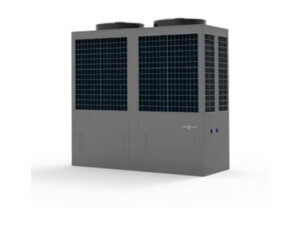
Heat pumps
Heat pumps are used to move heat from one medium where it’s readily available to another medium that can accept it. The medium donating the heat is called the “source,” while the one receiving the heat is called the “sink.”
They absorb heat from outside air and release that heat into a forced-air distribution system within the building. The heat is moved using a standard vapor-compression refrigeration cycle. Cold liquid refrigerant is evaporated within the outside heat exchanger. The heat-laden refrigerant gas is then piped to the compressor that greatly increases both its pressure and temperature. The hot gas is routed inside to a refrigerant-to-air heat exchanger where it condenses back to a liquid giving up the heat it transported to the building’s forced-air distribution system. The final step is to pass the cooled liquid through a thermal expansion valve that lowers its pressure and temperature, readying it for another trip to the outdoor unit.